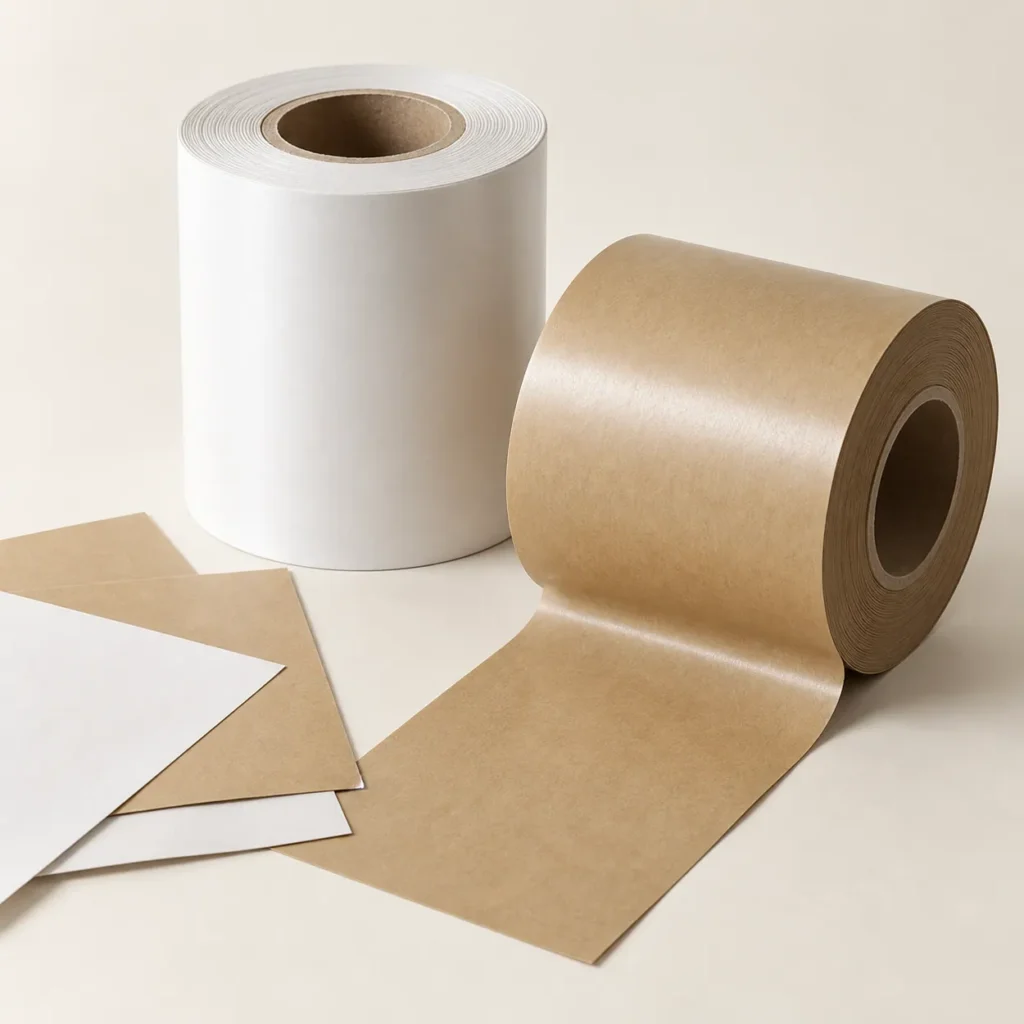
Buyers comparing takeaway bags and food wraps often encounter terms such as grease-resistant paper, barrier-coated paper and PE-coated paper. These terms are not interchangeable. One describes a desired performance characteristic, while another identifies a specific material layer. Understanding the difference helps prevent misleading quotes and unsupported sustainability claims.
Grease resistance is a performance requirement
Grease resistance describes how a paper construction resists oil or fat migration under a stated test or use condition. The result can depend on the paper furnish, surface treatment, barrier chemistry, applied weight, folds and seams. A bag that resists a lightly oily pastry may not behave the same way with freshly fried food or a much longer holding time.
When writing an RFQ, specify the food type, temperature, oil exposure and duration, then agree on a suitable test method and acceptance threshold. Avoid assuming one supplier’s general label guarantees the same result in every application.
PE-coated paper describes a material structure
PE means polyethylene, a plastic polymer. A PE-coated substrate contains a paper base and polyethylene layer. The construction can offer certain processing or moisture/barrier characteristics, but those depend on the type and coat weight of the PE, base paper and downstream converting process. PE-coated paper should not automatically be marketed as plastic-free or compostable.
What about food-contact regulations?
Food-contact suitability depends on the final construction and destination market. The paper, coating, inks, adhesives and actual conditions of use may all matter. Buyers should ask for relevant declarations, test records and documentation tied to the product they actually purchase. A report on one coated-paper sample does not establish conformity for every other formulation or finished bag.
Printing and converting considerations
Printing behavior, heat-sealing, creasing, folding and adhesion can vary with paper and coated structures. If you are purchasing coated rollstock for your own equipment, share machine operating requirements, roll width, core size, winding and relevant processing tests. If you are buying finished bags, request a sample tested after printing and conversion rather than evaluating the base paper alone.
Five questions worth asking suppliers
- Is the quoted product grease-resistant by a defined test, or does it use a named coating system?
- What base paper and coat weights are specified?
- Which food type, temperature and contact time were considered?
- Which standards and documents apply to my importing market?
- Can samples be tested under my actual packing, holding and handling conditions?
For related applications, compare grease-resistant paper bag concepts and PE-coated rollstock specifications. Final paper grades and suitability must be confirmed against factory samples and written documentation.
Compare a desired performance with a specified material structure
‘Grease-resistant’ expresses an intended behavior under defined conditions, while ‘PE-coated’ describes a paper-plus-polyethylene construction. They are not mutually exclusive categories and they do not imply the same environmental or food-contact claims. A quote should specify a measurable barrier target and the complete material stack.
| Selection factor | Grease-resistance requirement | PE-coated construction |
|---|---|---|
| What is specified? | Performance target and method under chosen exposure | Base paper, PE type, coat weight and coated side |
| Typical proof | Agreed grease exposure test on the proposed structure | Construction details plus relevant barrier/sealing trials |
| Converting implications | Folding, print and glue compatibility | Heat-seal, blocking, winding and print-side behavior |
| Food-contact claim | Only with evidence for intended contact conditions | Depends on exact plastic-paper structure and destination rules |
| End-of-life language | Needs product-specific support | Contains a plastic layer; do not call it plastic-free |
Scenario: a supplier replaces a grease-resistant sheet with PE-coated paper
A restaurant may request paper for a burger wrap, while one bidder offers treated uncoated paper and another quotes a PE-coated sheet. The quotes should not be compared until the buyer has specified grease exposure, wrapping method, printed contact side, folding, destination-market rules and disposal considerations. Different constructions may require different tests or customer approvals.
Further buyer questions
Does a higher base-paper gsm guarantee grease resistance?
No. Grammage and resistance to grease penetration describe different properties.
Can PE-coated paper be marketed as plastic-free?
No. The polyethylene coating is plastic. Any recycling or compostability claim must be supported for the finished construction and market.
Continue your sourcing research
Materials and coatings guide ↗ · PE-coated rolls and sheets ↗
This article offers general procurement guidance, not a guarantee of particular manufacturer capability or compliance. Confirm requirements, materials and tests against a written specification.