Finding paper bag factories online is easy; qualifying one for a real order requires more care. A professional B2B supplier evaluation should connect what a company says it can make with the evidence it can provide for your exact order.
1. Start with actual product fit
Ask the supplier which structures it has made for applications similar to yours. A producer experienced in retail kraft carriers is not automatically qualified to supply airline airsickness bags with specified liquid-containment tests. Send a drawing and the intended use rather than comparing photographs only.
2. Check the production processes relevant to your brief
For printed paper bags, relevant steps may include paper coating, print preparation, flexographic printing, slitting, gusset forming, folding and bag making. Ask which processes are handled in-house, what is subcontracted, and what documented checks happen between stages.
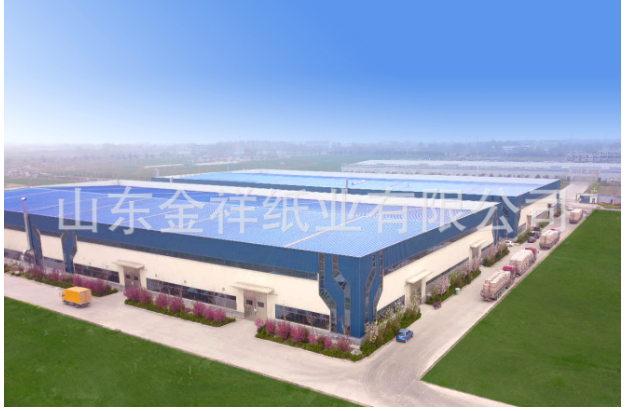
Factory images and equipment lists can be useful supporting material, but they do not independently prove that a particular construction, speed or annual capacity is available. If volumes are business-critical, request up-to-date equipment details or arrange a supplier audit.
3. Assess material and sample controls
Confirm the base paper, basis weight, coating or barrier structure and key tolerances. Request physical samples made using the proposed production method, especially where seam strength, grease resistance or food-contact use matters. Put your acceptance tests in writing before confirming the purchase order.
4. Match certificates to the actual request
Different documents serve different purposes: ISO management-system certification relates to systems within its scope; chain-of-custody certification supports certain traceable sourcing claims; and food-contact tests may cover only the tested material or final article. Always inspect the issuer, scope, certificate status and relation to your order. Learn how to review Jinxiang’s available documentation.
5. Confirm printing and change control
Provide editable artwork, Pantone or other color references where relevant, print-side orientation and a signed visual proof. Ask how deviations are handled and who is responsible for approving production samples.
6. Compare landed terms, not just unit prices
A quotation should distinguish any plate, mold or sampling cost from unit price. Record packing count, carton dimensions, export labels, lead time, Incoterms and responsibility for inspection. Lower quoted unit costs can be offset by unsuitable pallet loading or unclear quality criteria.
Paper bag supplier qualification checklist
- Company and production-site details are consistent with supplied records
- The factory reviews the application and technical drawing
- Material, coating and dimensional tolerances are agreed
- Sample and final inspection criteria are documented
- Certificate scope and destination requirements have been checked
- Artwork, packing and commercial terms are written in the quotation
Explore our company-profile factory overview, paper packaging products, or the custom packaging workflow. Factory information and capabilities shown on this site remain subject to current confirmation.
Supplier qualification: comparable evidence, not just brochure claims
A supplier evaluation should distinguish a factory’s advertised product list from what is confirmed for your proposed SKU. Use an evidence request sheet so multiple suppliers answer the same question. Photographs, a management-system certificate, a material test report and a finished product sample establish different facts.
| Qualification dimension | Request from the supplier | Reason for requesting it |
|---|---|---|
| Production relevance | Current line or facility information for the quoted product | Determine whether the shown equipment relates to your actual SKU |
| Approved specification | Material construction, dimensional drawing and sample revision | Compare quotes against the same defined scope |
| Quality controls | Relevant sample checks, test method and acceptance criteria | Avoid vague claims such as ‘high quality’ or ‘food-grade’ |
| Change management | Who signs off artwork, coating or construction changes | Reduce unexpected substitutions after sample approval |
| Commercial delivery | Packing, stated trade terms and named destination | Compare the full order assumptions, not unit price alone |
Scenario: two suppliers quote the same takeaway bag
Supplier A quotes a unit price without a handle test, a carton specification or an approved print proof. Supplier B quotes against a filled-load reference, material structure, print design and exact packing unit. The prices are not comparable until both bids cover the same required conditions. Request a revised quotation rather than assuming the cheaper offer is equivalent.
Further buyer questions
Is a factory visit always mandatory?
Not necessarily. Choose verification methods based on product risk, contract requirements, documentary evidence and the buyer’s qualification process.
Does a factory photo verify equipment capacity?
Not by itself. Obtain current evidence relevant to the quoted product and confirm capabilities and line availability with the facility.
Continue your sourcing research
Production qualification stages ↗ · Packing and delivery questions ↗
This article offers general procurement guidance, not a guarantee of particular manufacturer capability or compliance. Confirm requirements, materials and tests against a written specification.