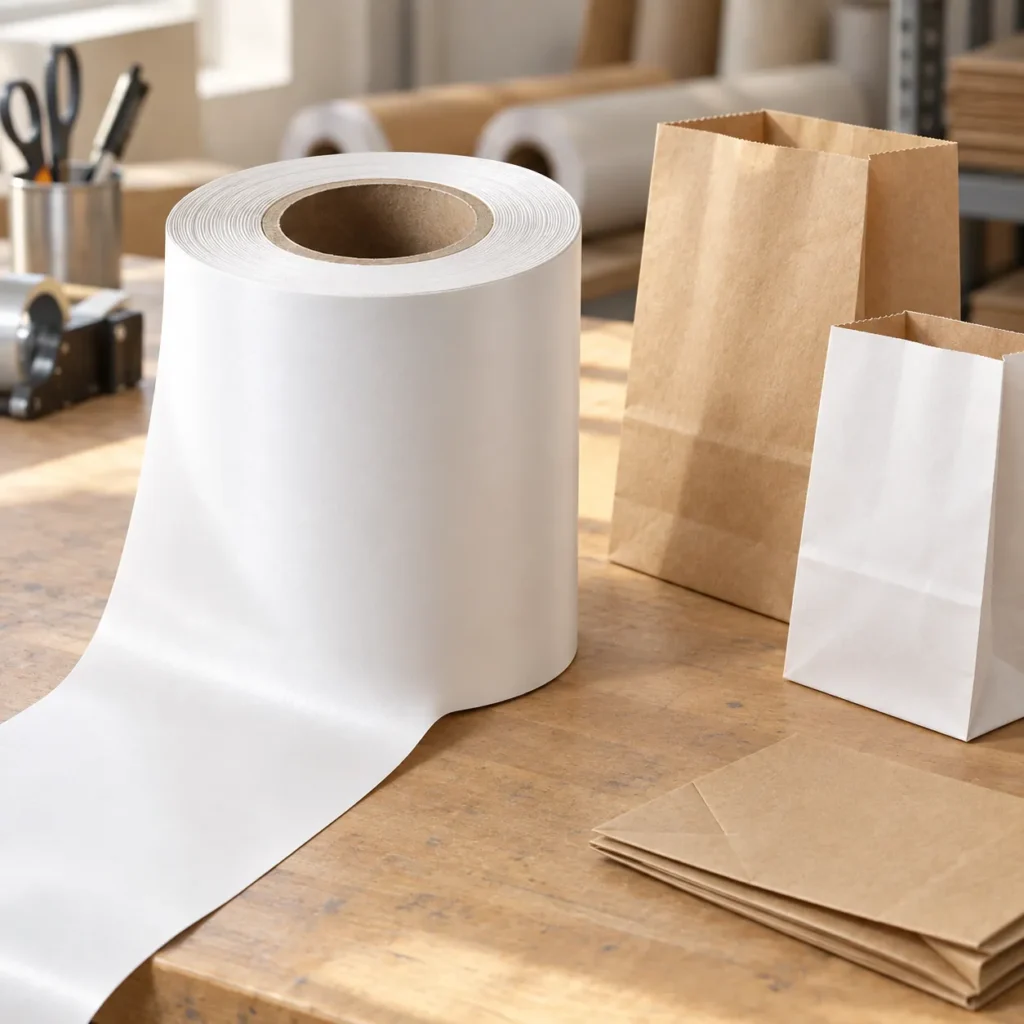
The machine trial matters as much as the roll specification
A roll of coated paper is an input material, not a finished food-contact product. Its suitability depends on the base paper, coating structure, downstream conversion process and equipment settings. Two rolls with similar visual appearance may run differently during printing, cutting, folding or sealing.
Before requesting PE-coated paper, capture the machine type, web path, roll dimensions, target product and acceptance tests. Ask the converter or technical team which variables are critical and which can be optimized after sampling.
Build a comparable roll specification
| Parameter | What to tell the supplier | How to verify |
|---|---|---|
| Base paper | Grade, gsm, strength and surface expectations | Approved sample and incoming paper checks |
| PE construction | Resin/application requirement and coated side | Layer structure and documented material specification |
| Coat weight | Target and tolerances to be confirmed | Applicable measurement method |
| Roll geometry | Width, core inner diameter, outer diameter and winding direction | Roll measurements and converting trial |
| Conversion behavior | Heat-seal or lamination needs, print side and fold expectations | Equipment-based approval run |
| Food-contact destination | Market, intended food and use conditions, if applicable | Evidence for the final contact structure |
How to review coating and converting behavior
Incoming quality planning should distinguish appearance, thickness, coat adhesion, blocking, winding tightness and web breaks. State splice allowances and roll labeling requirements if the process is sensitive to interruptions.
Seal strength, barrier behavior and dimensional stability should be assessed with an agreed method—not inferred from a single basis-weight figure. The intended machinery and processing temperature may change the result.
- Agree paper grammage and coating weight as separate values.
- Specify roll orientation, label fields, pallet protection and storage.
- Approve a representative production sample on the actual converter.
- Clarify which party validates finished-product food-contact compliance.
RFQ data that helps avoid rework
Provide drawing, roll format, monthly consumption, downstream machine notes, desired surface treatment and shipping terms. Record any material or processing parameters the converter cannot change.
PE-coated paper product ↗ · Materials and printing guide ↗ · Quality evidence ↗
Buyer questions worth resolving
Is a PE coating automatically a certified food-contact layer?
No. Suitability depends on exact materials, migration or other relevant testing, food type and the applicable destination-market rules.
What if the supplier has no data for my machine?
Ask for agreed trial quantity and acceptance criteria. Do not assume runnability or heat-sealing performance from a general product description.
Prepare a useful sourcing brief
A clear inquiry gives a supplier the intended use, format, material and testing questions—not just a target price. Include your destination market, drawing or sample, print design, order forecast and acceptance criteria.
Build a local RFQ worksheet ↗ · Review quality documentation ↗